Headwater Wetlands: The Weirstone 30by30 Project
Restoring wetflush habitat in the Teme headwaters
About the project
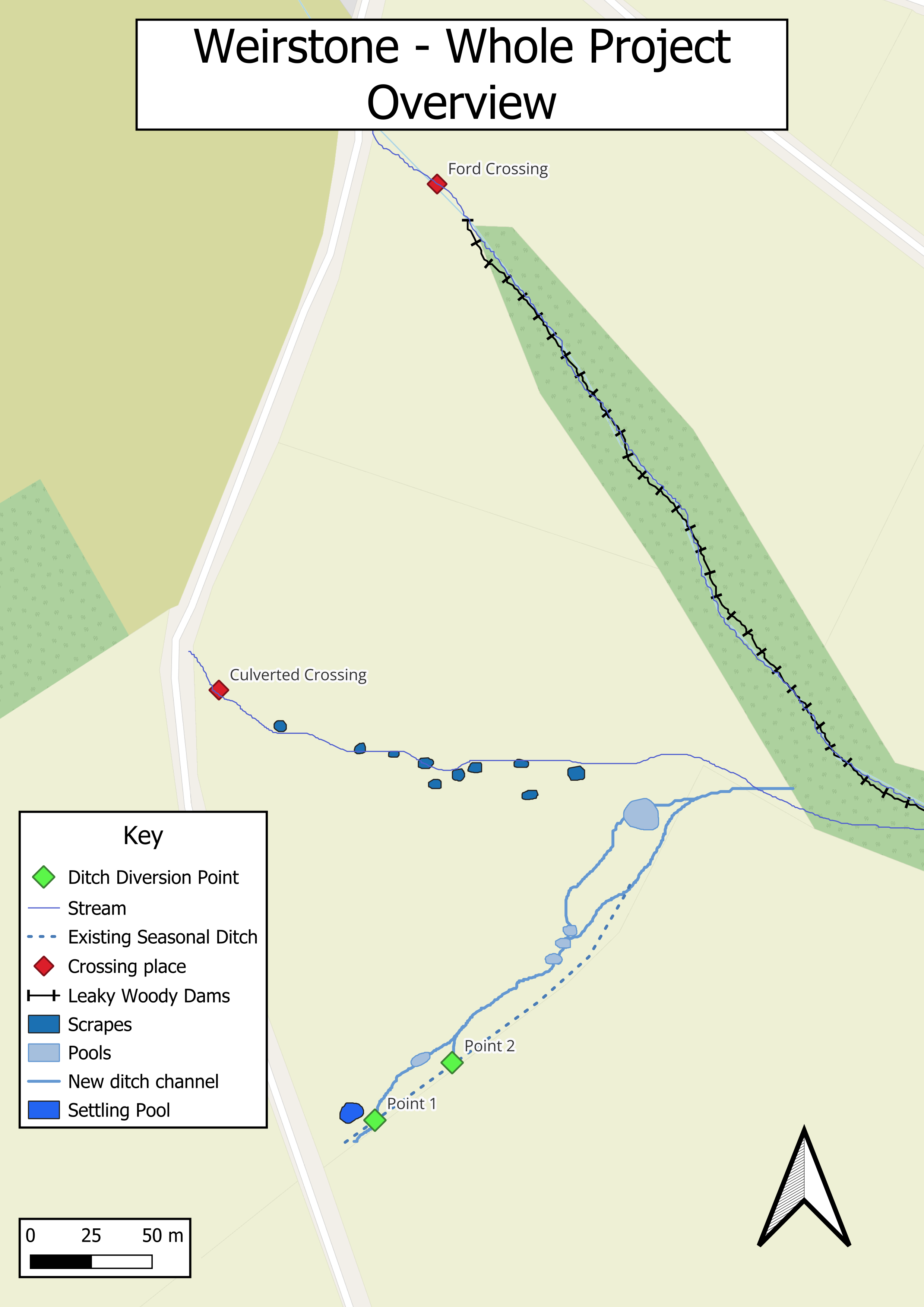
The Weirstone 30by30 Project is enhancing an important area of wetflush habitat in the headwaters of the River Teme, just above Newcastle on Clun. Led by Severn Rivers Trust with the support of Shropshire Hills National Landscape and the landowner, the project will create a network of shallow pools and scrapes that hold more water in the uplands and support a richer mix of wetland wildlife.
This work is funded through the Shropshire Hills 30by30 Fund. It builds on a detailed Water Audit carried out in 2024-25 through the Farming in Protected Landscapes programme, which identified opportunities to increase water retention and improve wetland habitat across the site. The landowner and Severn Rivers Trust are delivering the project together, with SRT managing the groundworks and the landowner coordinating the fencing.
What we are doing
Wetflush habitats are naturally damp areas where water seeps through the soil year round. They provide important feeding and breeding areas for insects, wading birds and amphibians. They also help slow surface water in the upper catchment.
To strengthen these natural functions, we are:
-
Creating a series of small scrapes and pools across the site.
-
Improving the wetness and structure of the habitat.
-
Slowing overland flow and retaining more water in the headwaters.
-
Supporting long-term land management that benefits both farming and wildlife.
The project has been developed closely with the landowner and Shropshire Hills National Landscape. The landowner is keen for the site to demonstrate how farmers and environmental organisations can work together in a simple, positive and practical way. She has also invited before and after drone footage to help share the changes as the habitat develops.
Why it matters
Healthy upland wetlands are vital for the resilience of river catchments. By storing water and releasing it slowly, they reduce fast runoff, protect soils and contribute to steadier river flows downstream.
Restoring wetflush habitat in the Teme headwaters will:
-
Improve local biodiversity.
-
Hold more water during heavy rainfall.
-
Support the landscape during dry periods.
-
Build natural resilience as the climate changes.
Small upland projects like this help create a stronger, more connected network of habitats across the Shropshire Hills.
Achievements so far
-
Water Audit completed through the FiPL programme.
-
Habitat design jointly developed with Shropshire Hills National Landscape.
-
Groundworks planning underway.
-
Fencing preparation led by the landowner.
-
Baseline drone imagery captured to monitor change over time.
Voices from the project
‘Working so closely with the landowner on this site has been a real highlight. Creating these small wetland features will help the headwaters hold more water and support a richer mix of wildlife, and it shows how practical collaboration can make a real difference.’
Mollie Hooper, Catchment Restoration Officer
Looking ahead
Construction of the pools and scrapes will take place over the coming months. Within a year these features will begin to naturalise. Over five to ten years the site will support a richer wetland community and hold more water through all seasons.