
Slowing the Flow at Brimfield Brook
Building natural flood resilience and discovering a rare native species in north Herefordshire
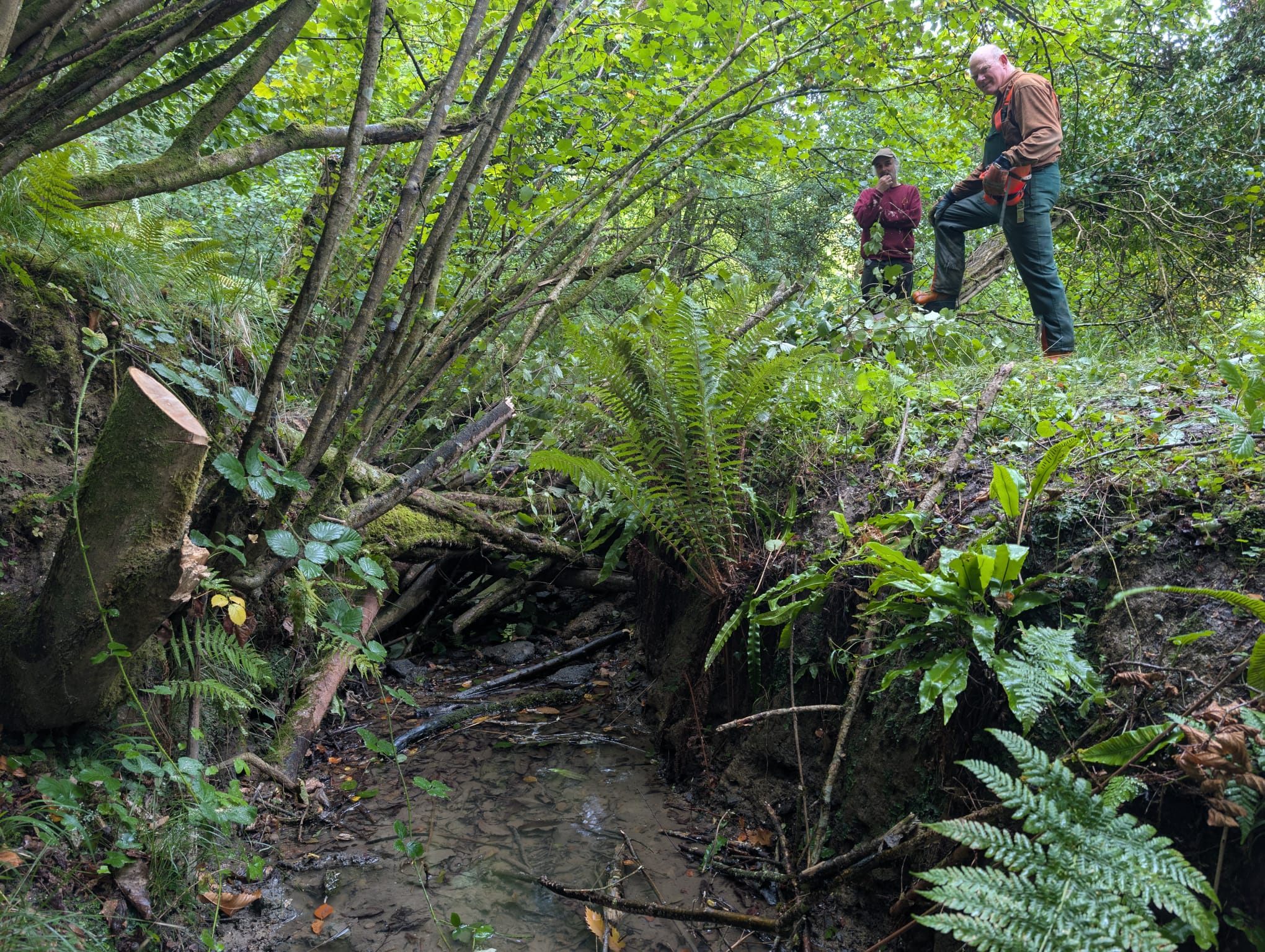
In north Herefordshire, a small stream is showing how simple, nature-based solutions can make a big difference for both people and wildlife.
The Brimfield Brook Natural Flood Management scheme began in autumn 2023 and runs until spring 2027. Funded by Herefordshire Council and delivered by Severn Rivers Trust, the project supports local farmers and landowners to put natural flood management (NFM) into practice across the catchment.
This stretch of countryside, near the villages of Orleton and Brimfield, is no stranger to heavy rainfall and flash flooding. During the storms of 2024, a mudslide even cut off part of Orleton village. Now, by restoring the landscape’s natural ability to hold back water, the project is helping to reduce that risk in the years to come.
Working with nature
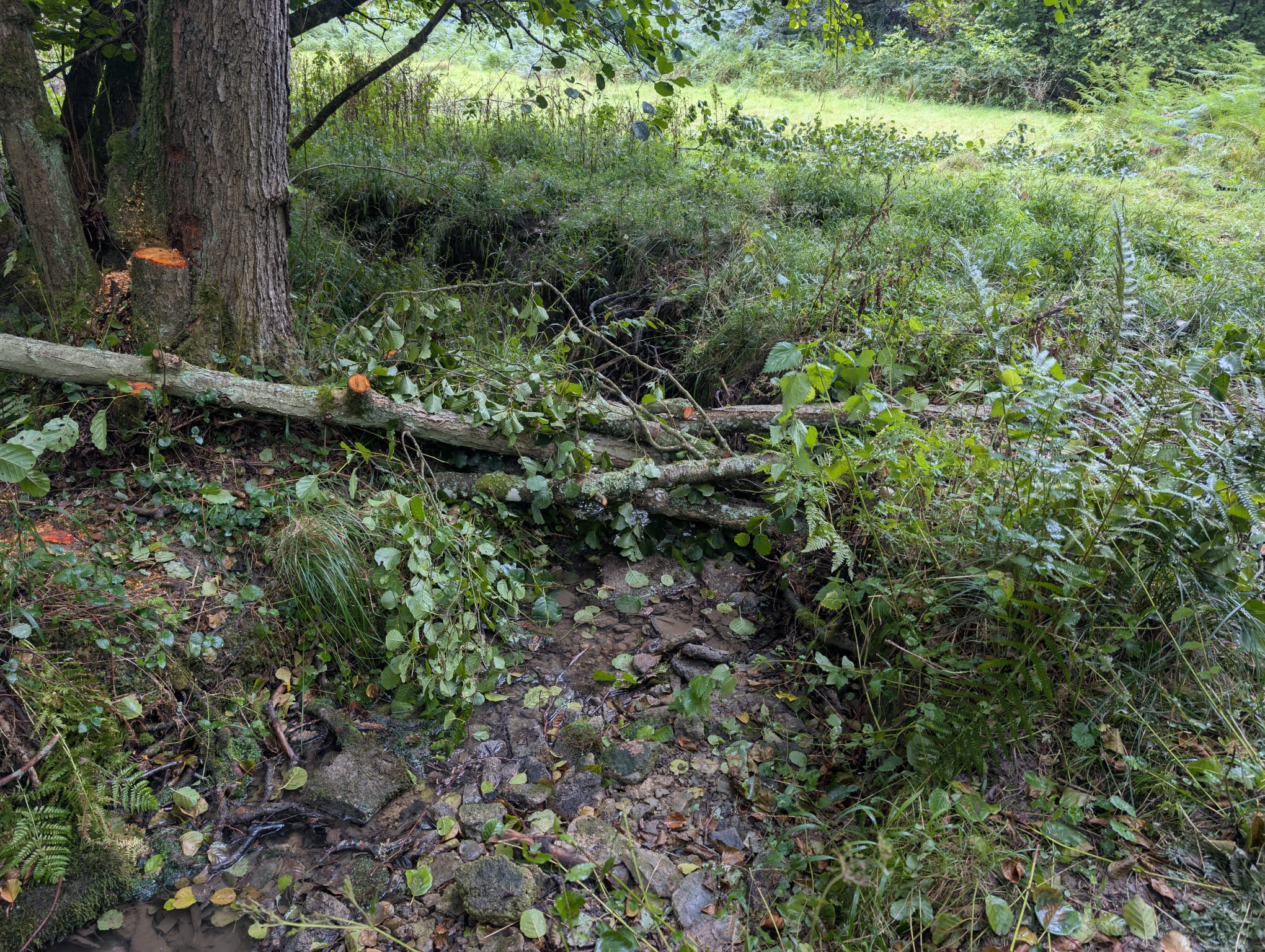
Severn Rivers Trust is working with local landowners to design and deliver measures that help the land hold water naturally. The team carries out farm walkovers, soil testing and habitat surveys to identify the best opportunities for slowing the flow.
At Waterloo Farm, home to Chris Evans and Looby Macnamara of Applewood Permaculture Centre, a series of leaky woody dams has been installed in the headwaters of the brook.
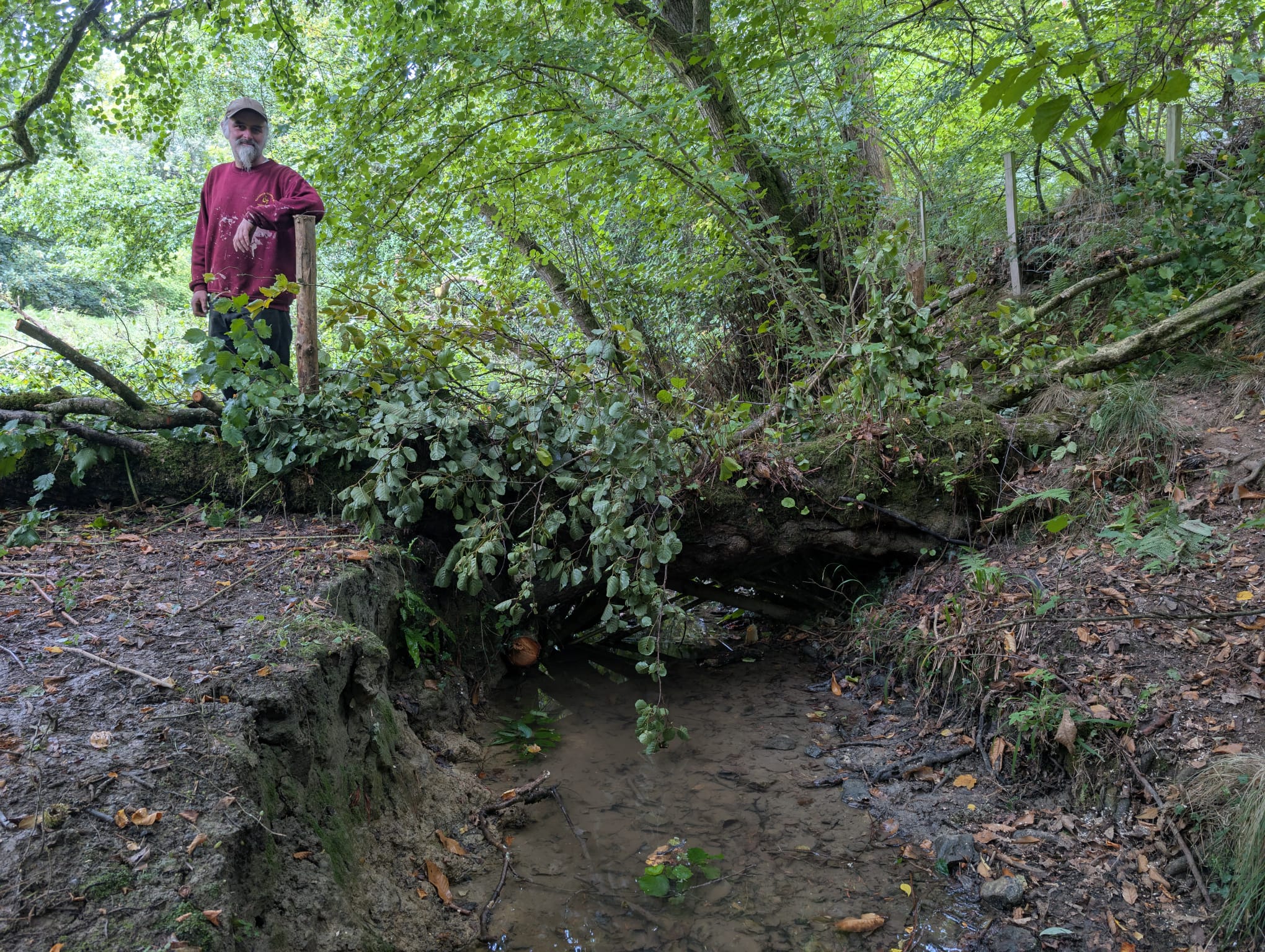
Each dam is built from natural materials such as branches, trunks and brash from nearby trees. They are positioned to hold back fast-flowing water during storms, giving the landscape time to absorb more rainfall.
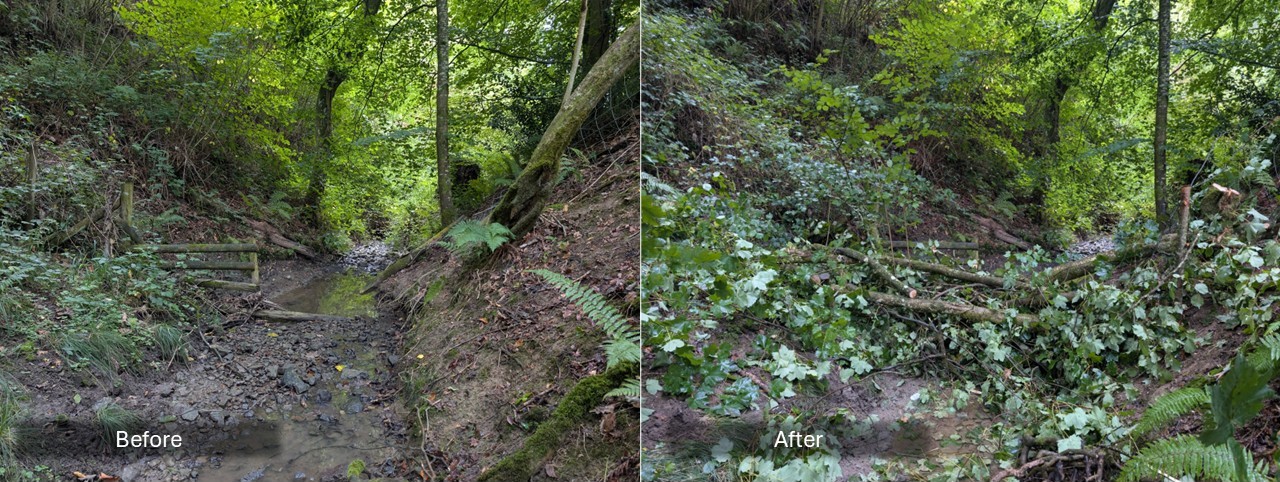
These simple features are already slowing flows across 250 metres of stream and helping to reduce flood peaks further downstream.
A special discovery
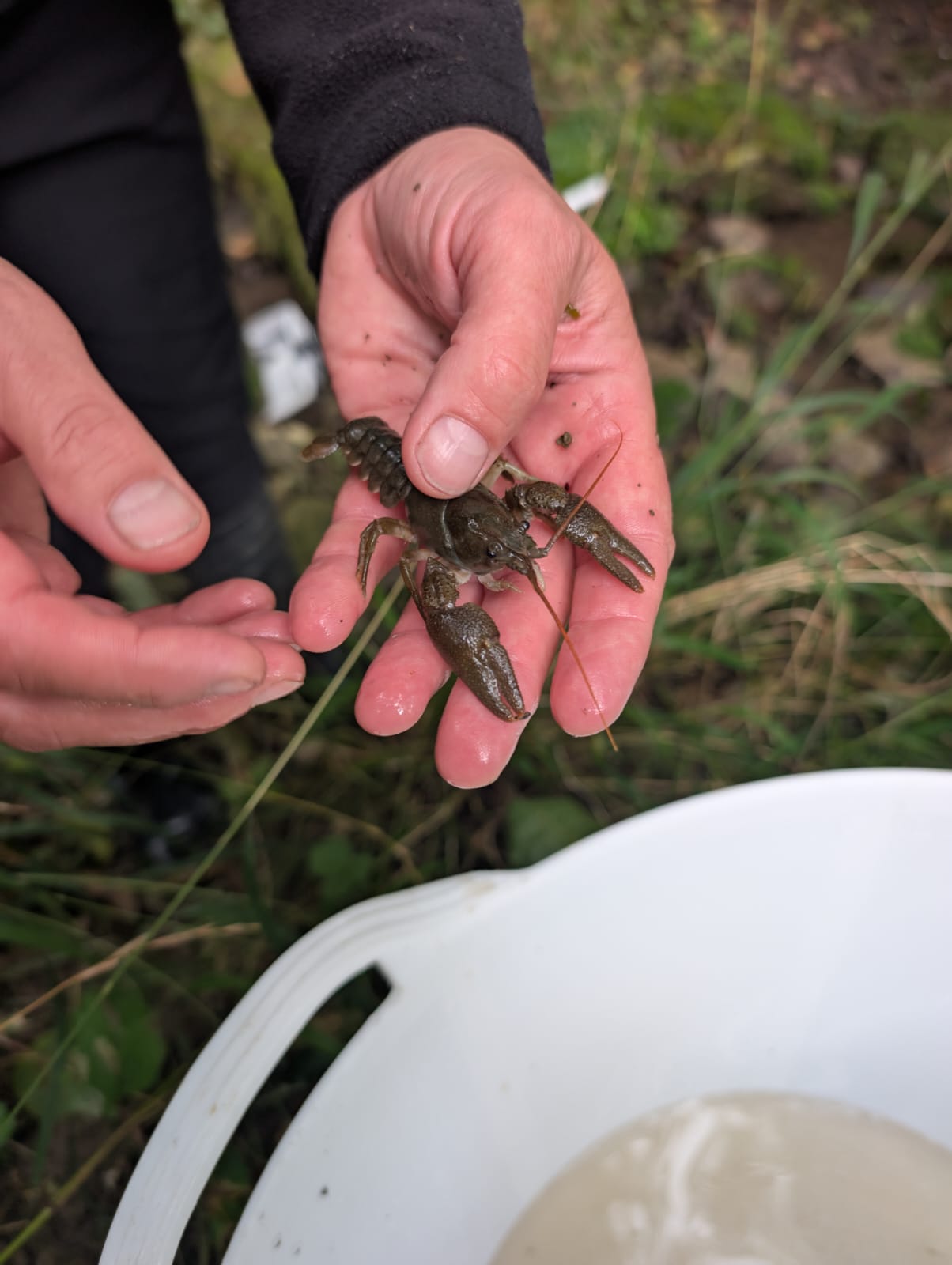
During baseline surveys at Waterloo Farm, the team made an exciting find: a small breeding population of white-clawed crayfish, the UK’s only native crayfish.
This discovery confirmed that Brimfield Brook remains a stronghold for this endangered species, which has disappeared from many English rivers due to pollution and competition from invasive signal crayfish.
Working closely with the Environment Agency’s biodiversity team, the design of the dams was adapted to protect the crayfish. The structures now double as valuable refuge spaces, providing cover during high flows and helping to create deeper pools that stay wet during dry spells.
Building resilience together
So far, the Brimfield Brook scheme has:
-
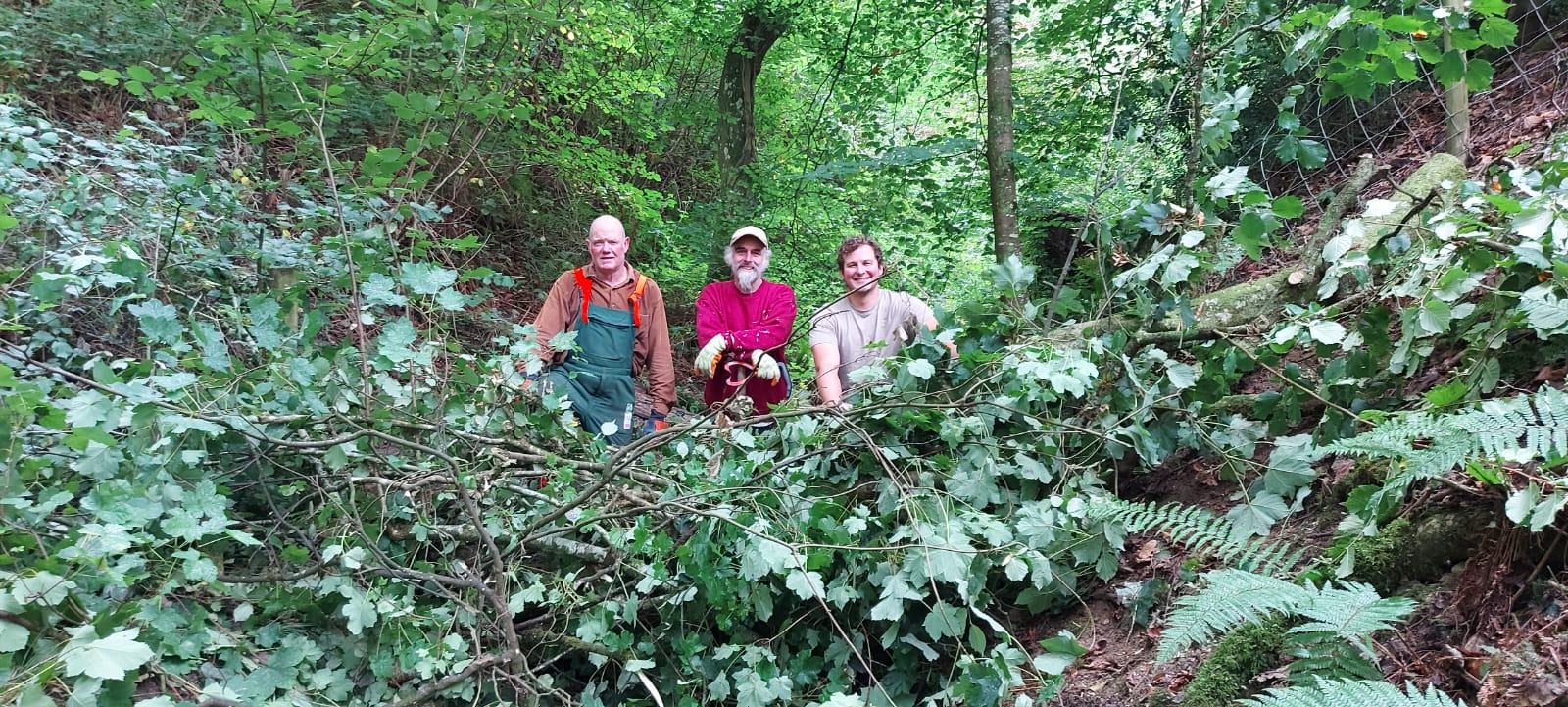
Completed 8 farm walkovers and made 40 recommendations for landowners
-
Supported 4 farms through Herefordshire Council’s NFM Construction Grant
-
Installed leaky dams across 250 metres of watercourse
-
Improved soil management across 50 hectares of farmland
The project is part of a wider network of NFM schemes across Herefordshire, including work by the Wye and Usk Foundation in neighbouring catchments. Together, these projects are restoring the natural resilience of the landscape one farm at a time.
Community and monitoring
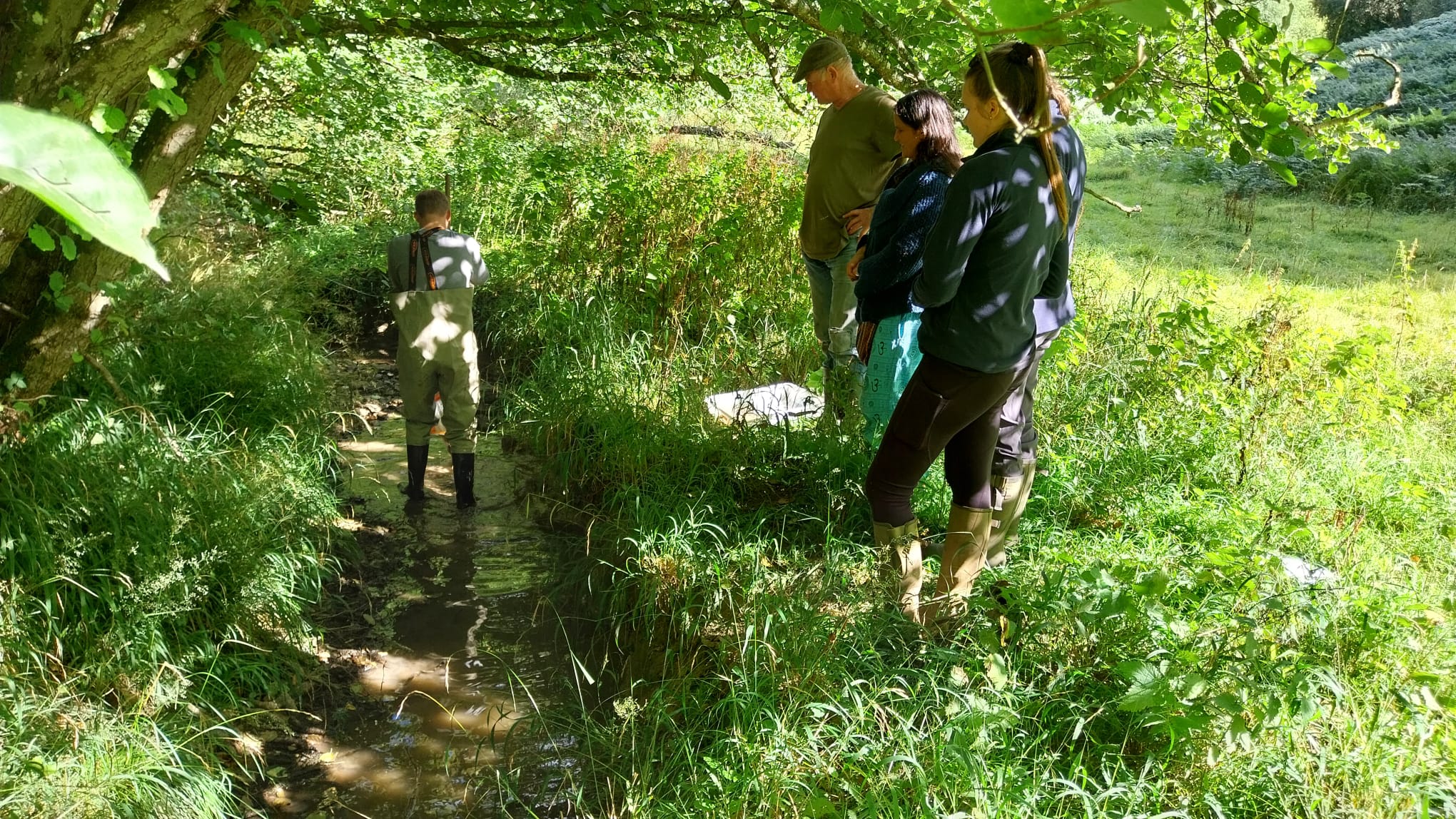
Engagement with local landowners and residents is central to this work. Earlier this year, the team hosted a community drop-in event to share advice and gather new project ideas. Volunteers are also helping to monitor river health by sampling invertebrates, providing valuable data on how the stream is responding to change.
Voices from the project
“Natural Flood Management is a wonderful holistic way to bring together landowners, eNGOs, councils and local communities to store more water in the landscape in a way that helps the farm business, nature and reduces flood risk. Finding White Clawed Crayfish at Waterloo Farm was lovely to see in this catchment.”
Jacob Loughran, Project Officer, Severn Rivers Trust
Looking ahead
Over the next two years, Severn Rivers Trust will continue to work with landowners across the Brimfield Brook catchment to install more natural flood management features and monitor their impact.
Each new dam, wetland or soil improvement adds to a growing network of natural defences that protect homes, farmland and wildlife. By working with nature, we are building a landscape that can better withstand the challenges of a changing climate.
Funder
Herefordshire Council
Partners
Herefordshire Council, Environment Agency, Applewood Permaculture Centre, Worcester University, local landowners